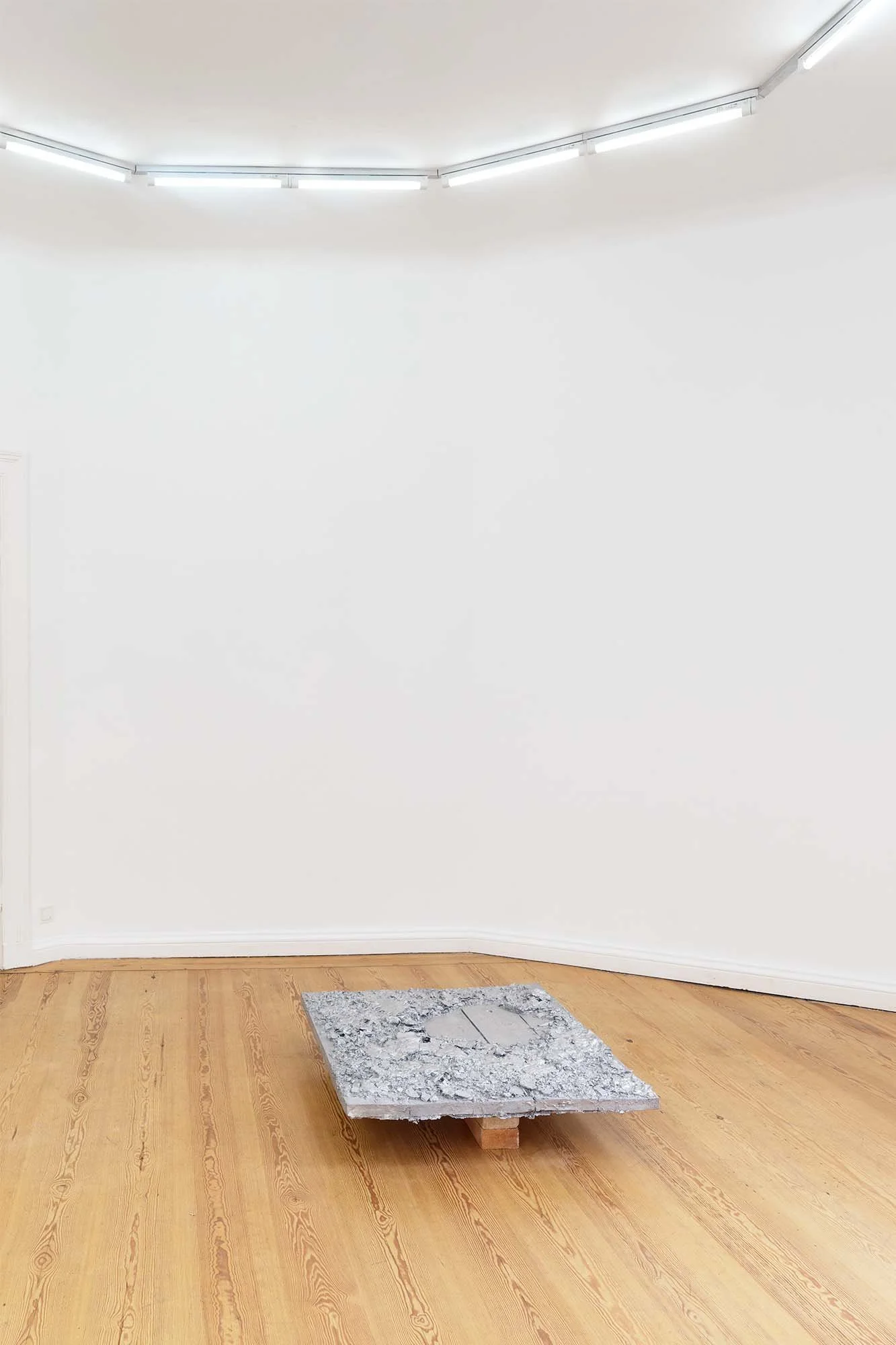
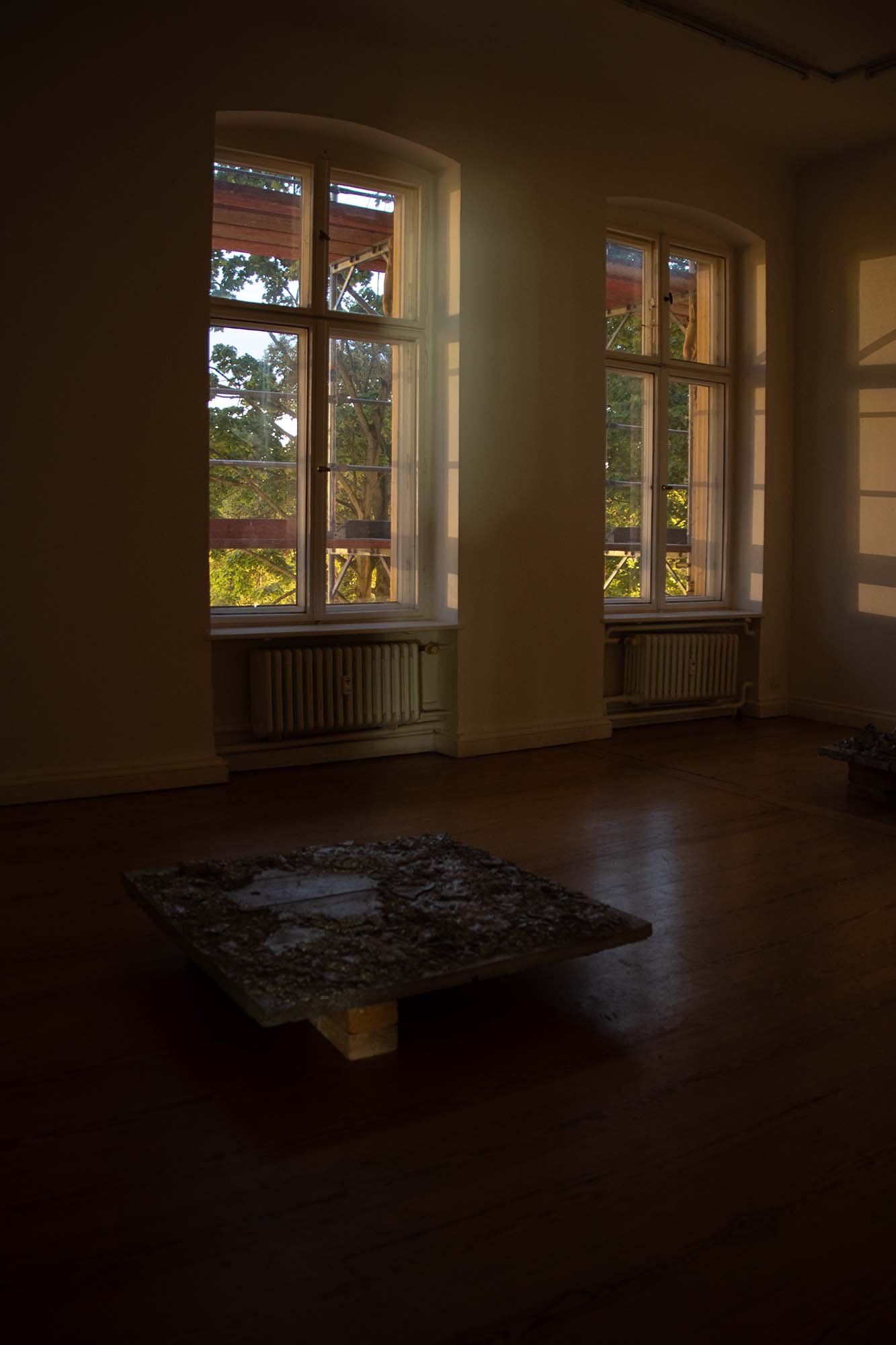
Absence First.
2025
aluminum, chamotte bricks
27 x 111 x 100 cm
photo: Eric Tschernov
Installation view: exculpate - Claudia Mann, PSM, Berlin
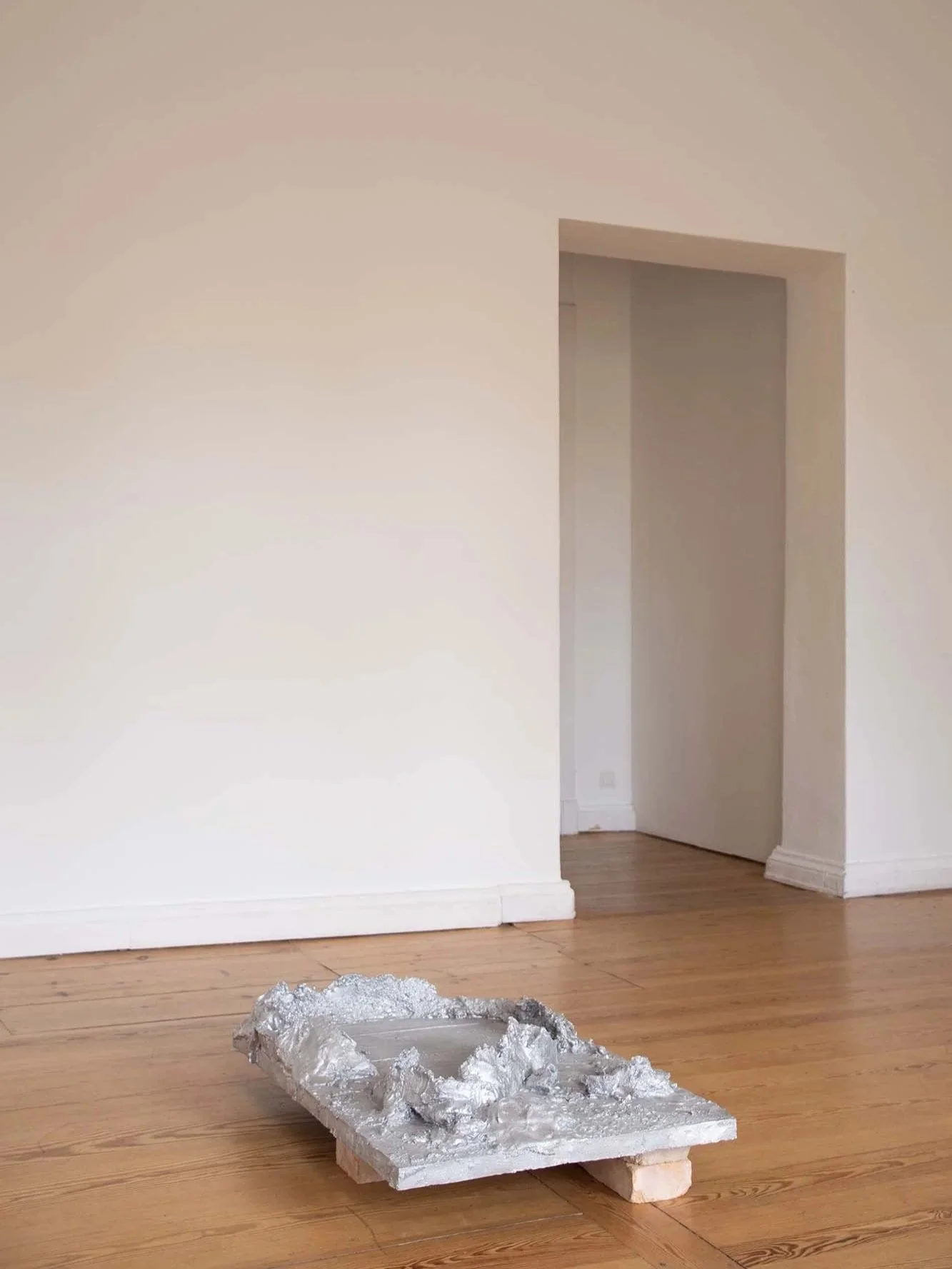
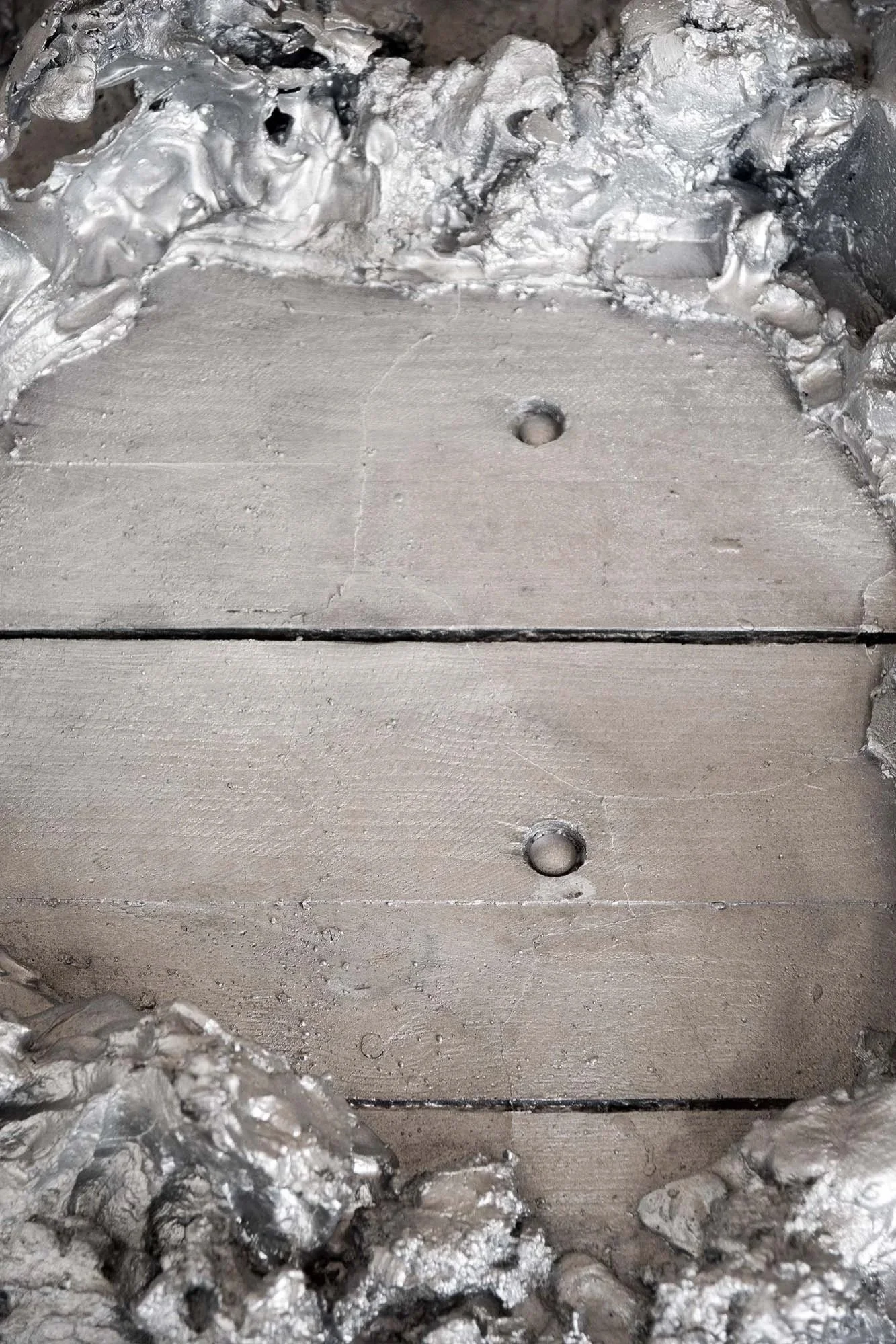
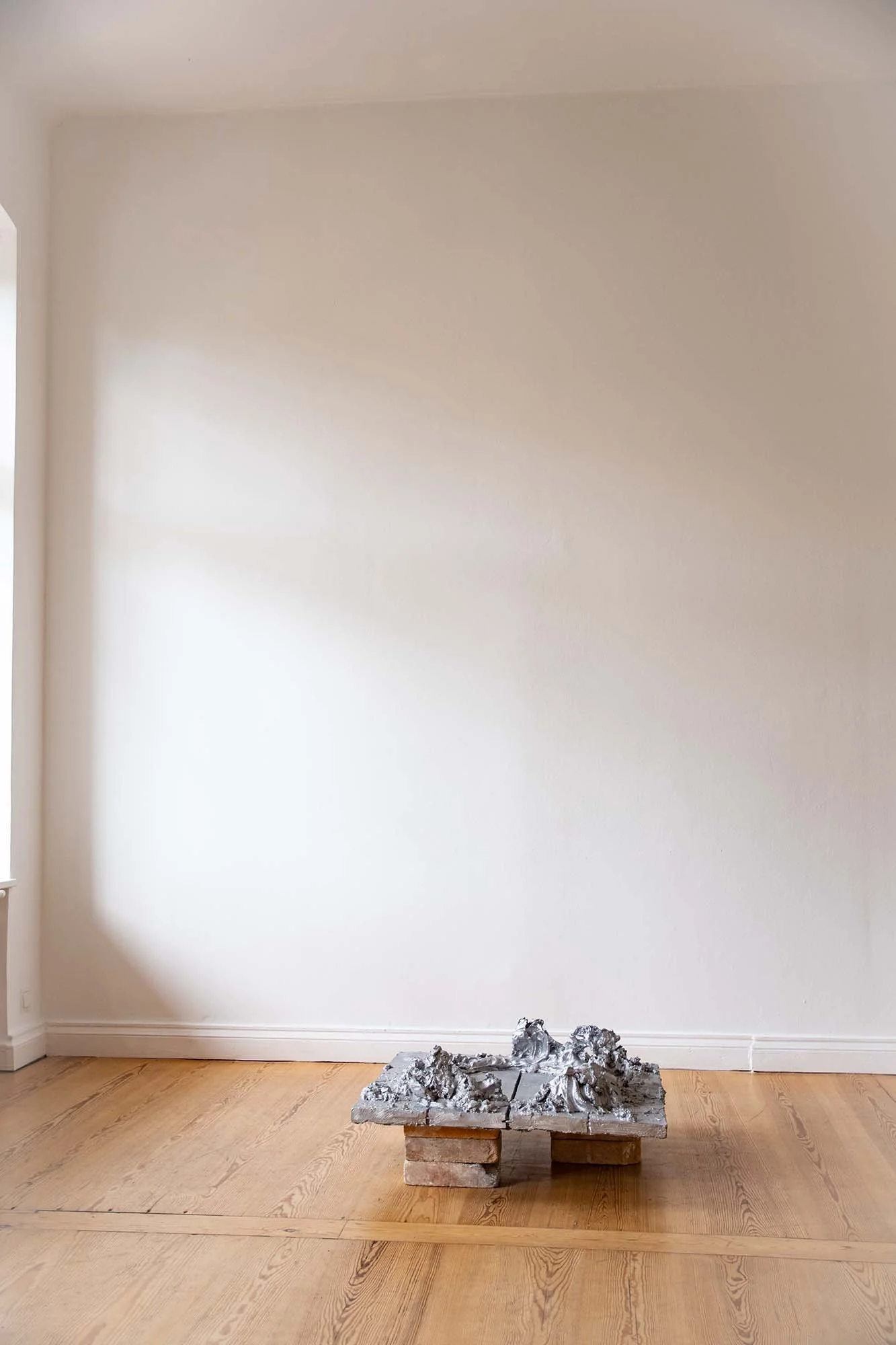
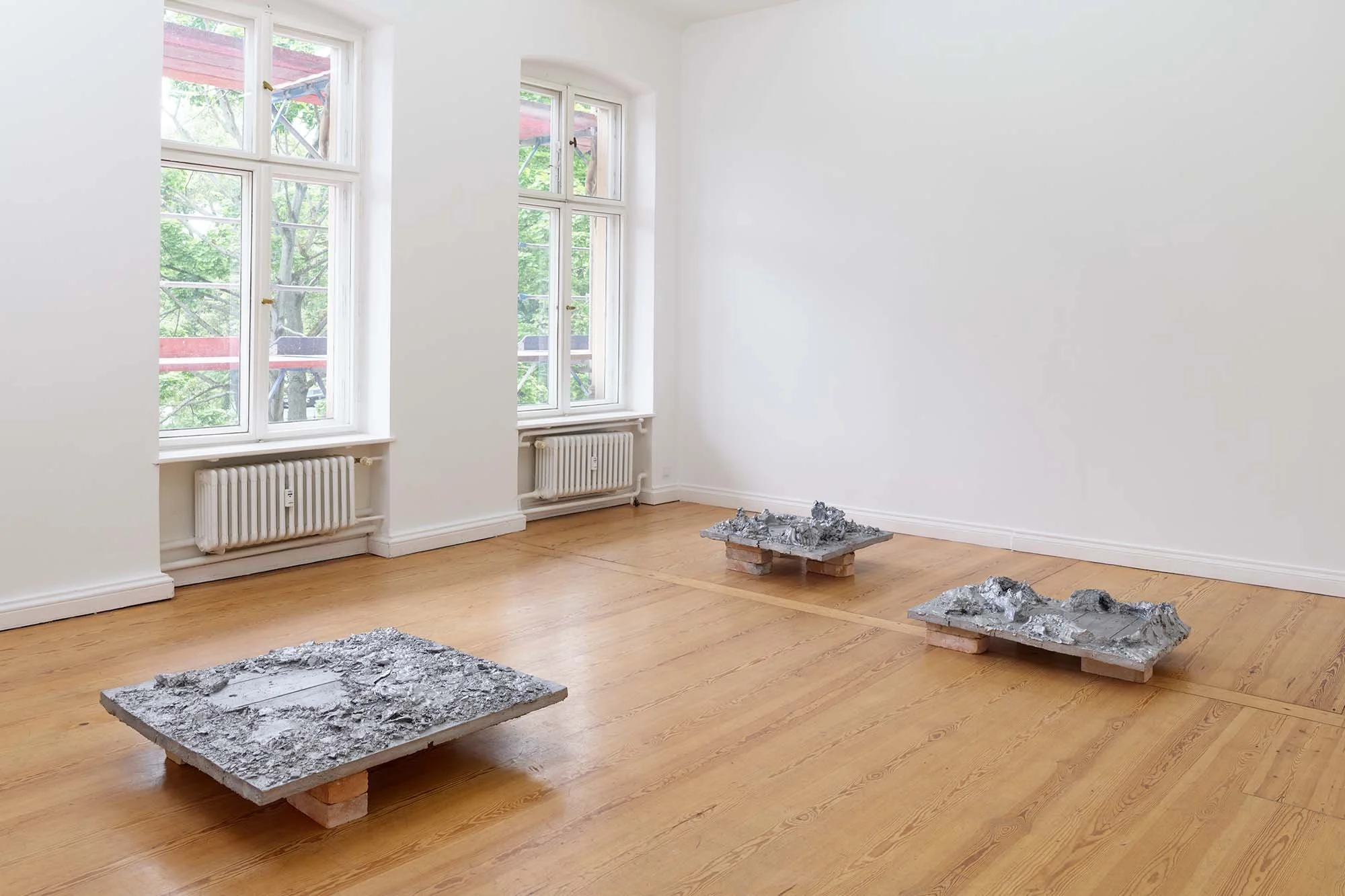
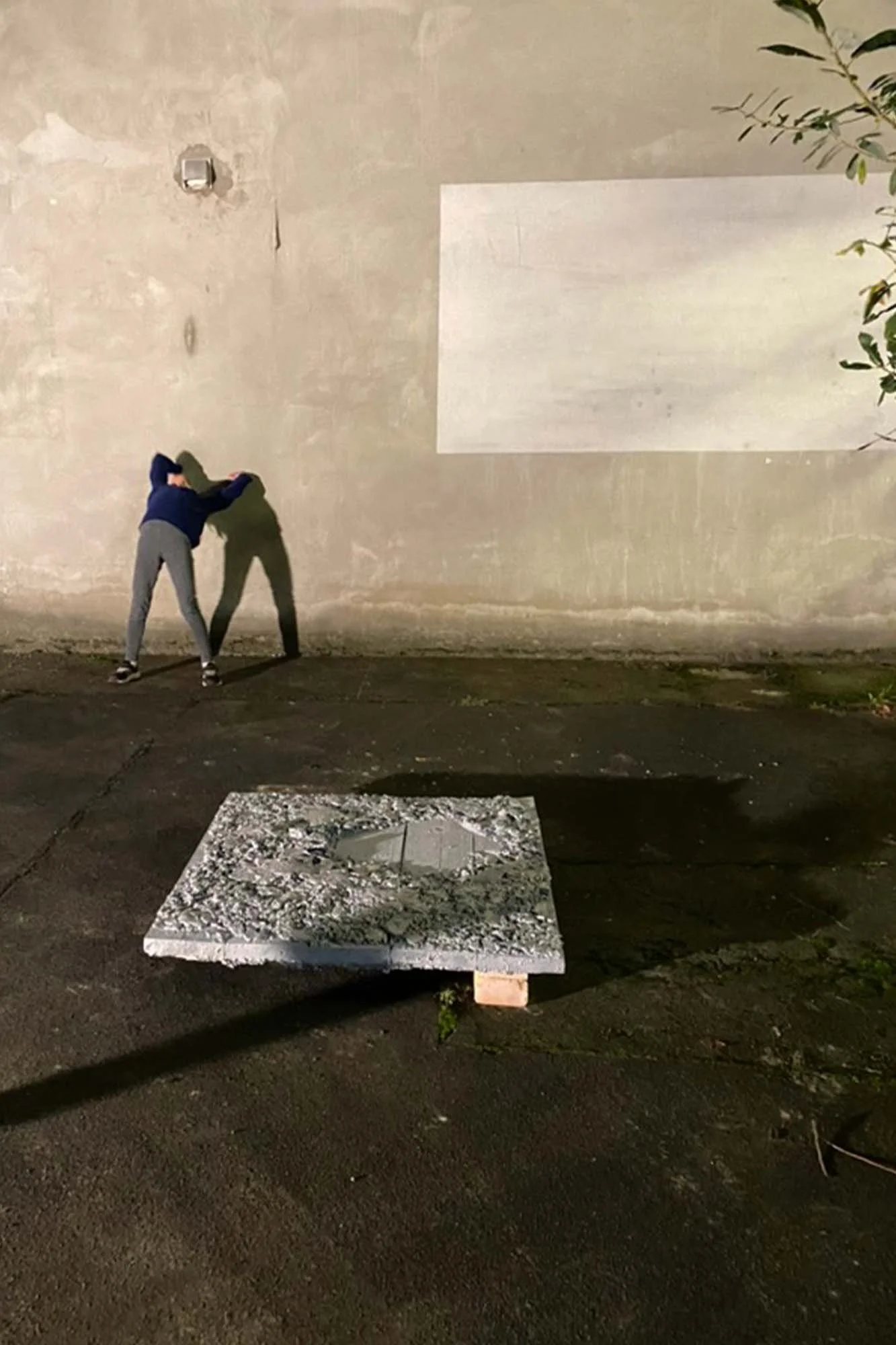
In Absence First.,visitors encounter aluminium cast from the original wooden boards used in the making of sculptures, which have since been removed. What remains are impressions, irregular formations, and spatial relationships that once held mass. By casting every element and transforming it into one material, the former traces become permanent and valid. The surface, formed through the making of a sculpture, now draws attention on the former blind spot of its standing point. These pieces refer to one of Mann’s theses: sculpture is ground. In them, she contends with loss and manifests the simultaneity of absence and presence.
---
In Absence First. begegnen die Besucher Aluminiumabgüssen von den ursprünglichen Holzplatten, die bei der Herstellung von Skulpturen verwendet wurden und inzwischen entfernt wurden. Was bleibt, sind Eindrücke, unregelmäßige Formationen und räumliche Beziehungen, die einst Masse hielten. Durch das Abgießen jedes Elements und die Umwandlung in ein Material werden die ehemaligen Spuren dauerhaft und gültig. Die Oberfläche, die durch die Herstellung einer Skulptur geformt wurde, lenkt nun die Aufmerksamkeit auf den ehemaligen blinden Fleck ihres Standpunkts. Diese Stücke beziehen sich auf eine von Manns Thesen: Skulptur ist Boden. In ihnen setzt sie sich mit Verlust auseinander und manifestiert die Gleichzeitigkeit von Abwesenheit und Präsenz.
Flo Vi Ru (Absence First.)
2025
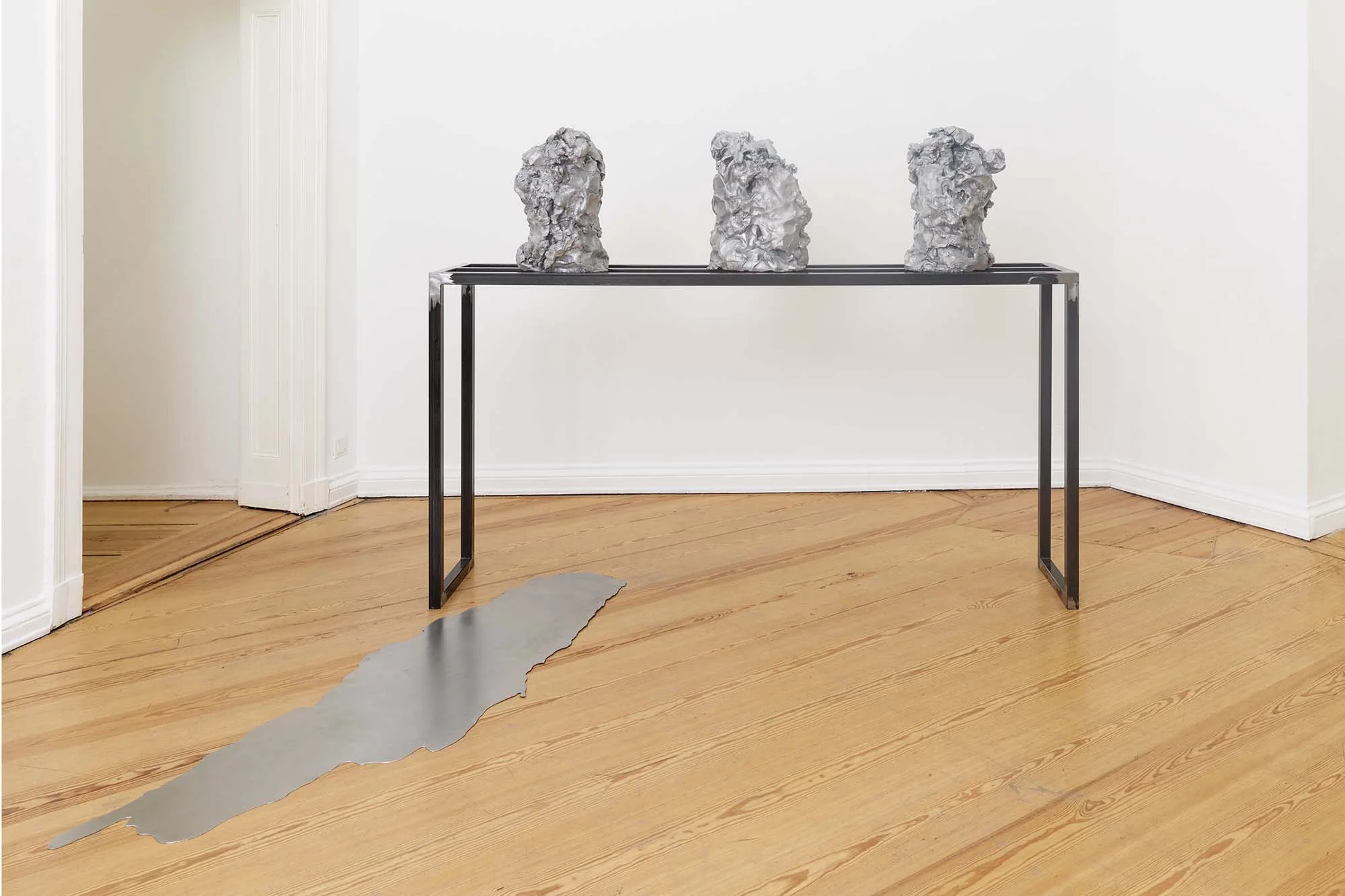
aluminum, steel
115 x 210 x 170 cm
photo: Claudia Mann, VG Bild-Kunst, Bonn
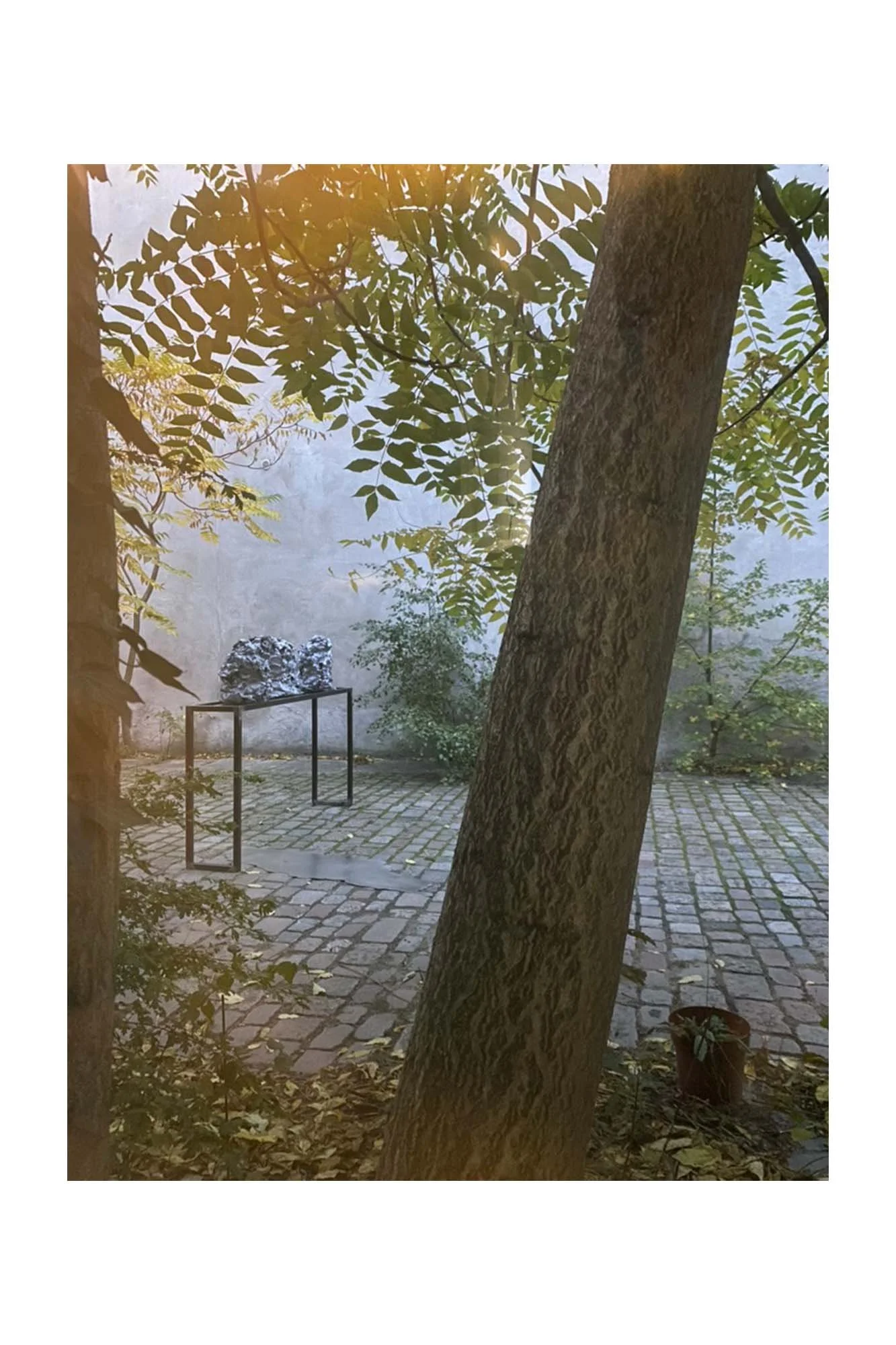
exhibition view: Lifelong, all you men are blind”(Goethe, Faust II, Midnight), HAUNT, Berlin, 2025
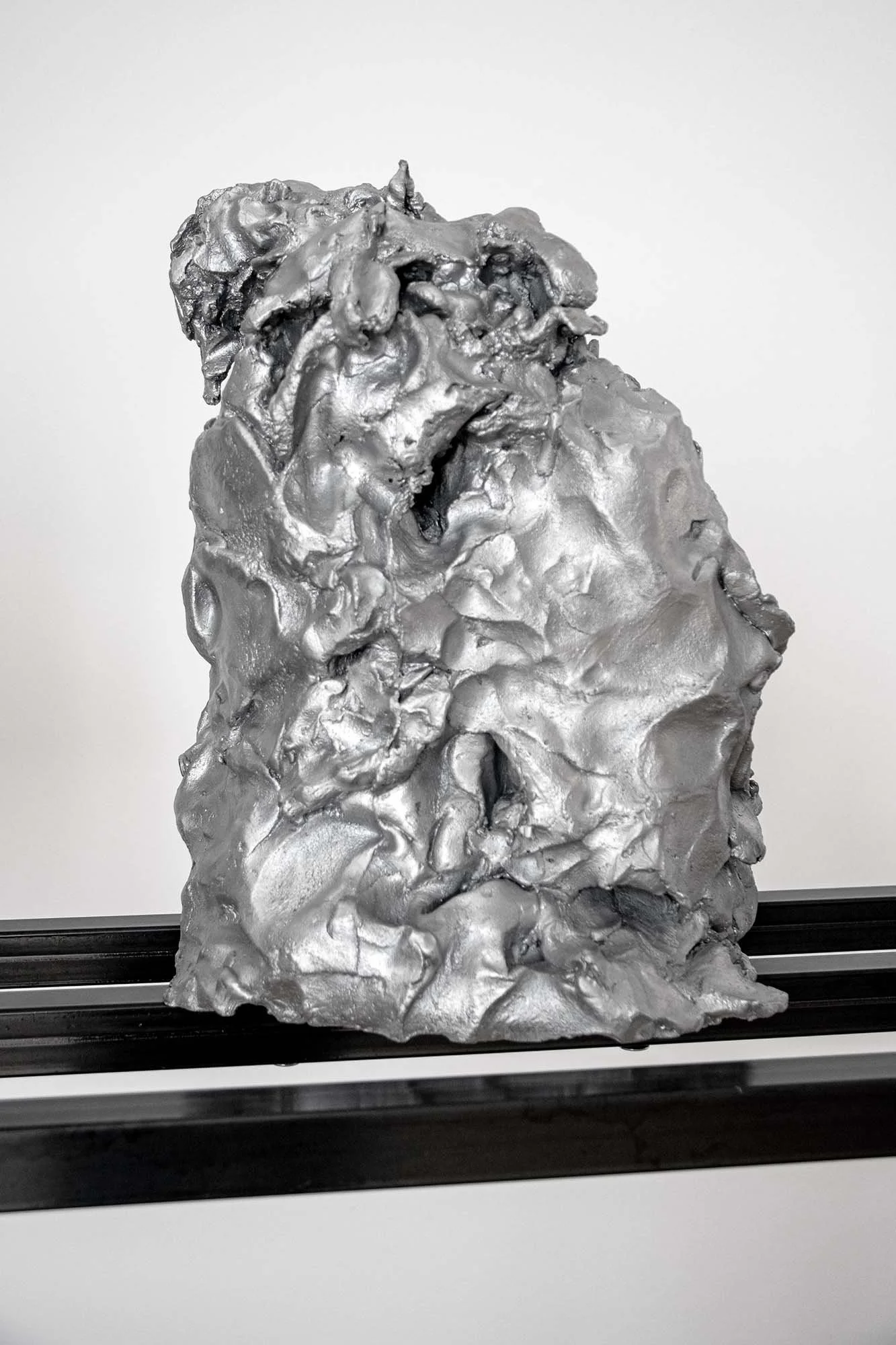
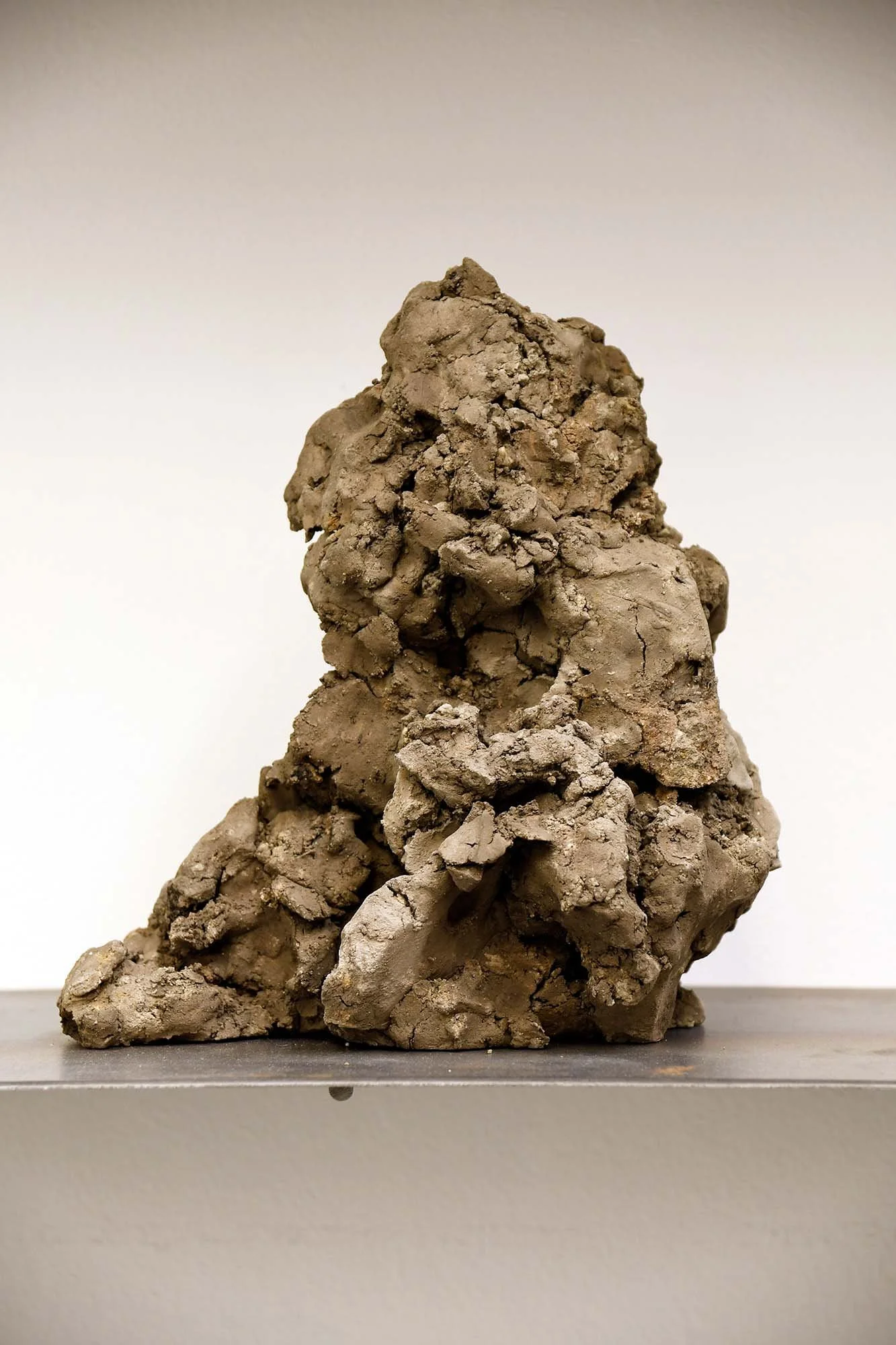
In Flo Vi Ru (Absence First.), 2025, Mann references Samuel Beckett’s Come and Go, in which three women briefly discuss one another in pairs, keeping secrets from the third. A possible reading suggests all three are terminally ill, yet unaware. In this context of presence, absence, consideration and solidarity, Flo, Vi and Ru move towards and away from each other, creating a supposed protective space. Mann translates this through three identical casts, each oriented differently on a steel bench, but all positioned to the viewers’ eye level. At first glance, they seem to be individual amorphous forms, but close observation reveals they are the same. They are both physically and metaphorically brought to a level of equality: social and physical fears, but especially the existential fear of dying, dominate all living beings.
Furthermore, the presence of the three women is punctuated by what is not there: a shadow cast on the floor becomes a stand-in for a body no longer living, a void as much a participant in the scene as the sculptural forms themselves. The work speaks to the power of unspoken compassion: a disturbing truth is not heard, not acknowledged, and yet within that refusal emerges care—no guilt is imposed, no shame revealed. Through this, Mann explores the ethics of silence, of withholding, of absence as a form of tenderness.
---
In Flo Vi Ru (Absence First.), 2025, bezieht sich Mann auf Samuel Becketts Come and Go, in dem drei Frauen sich kurz zu zweit unterhalten und Geheimnisse voreinander bewahren. Eine mögliche Lesart legt nahe, dass alle drei unheilbar krank sind, jedoch nichts voneinander wissen. In diesem Kontext von Präsenz, Abwesenheit, Überlegung und Solidarität bewegen sich Flo, Vi und Ru aufeinander zu und wieder voneinander weg, wodurch ein vermeintlich schützender Raum entsteht. Mann übersetzt dies durch drei identische Abgüsse, die jeweils unterschiedlich auf einer Stahlbank ausgerichtet sind, aber alle auf Augenhöhe des Betrachters positioniert sind. Auf den ersten Blick scheinen sie individuelle amorphe Formen zu sein, doch bei näherer Betrachtung wird deutlich, dass sie identisch sind. Sie werden sowohl physisch als auch metaphorisch auf eine Ebene der Gleichwertigkeit gebracht: soziale und physische Ängste, aber vor allem die existenzielle Angst vor dem Tod, dominieren alle Lebewesen.
Darüber hinaus wird die Präsenz der drei Frauen durch das, was nicht da ist, unterbrochen: Ein auf den Boden geworfener Schatten wird zum Stellvertreter für einen nicht mehr lebenden und ganzen Körper, ein Vakuum, das ebenso Teilnehmer der Szene ist wie die skulpturalen Formen selbst. Das Werk spricht von der Kraft unausgesprochener Mitmenschlichkeit: Eine beunruhigende Wahrheit wird nicht gehört, nicht anerkannt, und doch entsteht in dieser Verweigerung Fürsorge – keine Schuld wird auferlegt, keine Scham offenbart. Durch dieses Vorgehen erforscht Mann die Ethik des Schweigens, des Zurückhaltens, der Abwesenheit als Form der Zärtlichkeit.
In Flo Vi Ru (Absence First.), 2025, Mann references Samuel Beckett’s Come and Go, in which three women briefly discuss one another in pairs, keeping secrets from the third. A possible reading suggests all three are terminally ill, yet unaware. In this context of presence, absence, consideration and solidarity, Flo, Vi and Ru move towards and away from each other, creating a supposed protective space. Mann translates this through three identical casts, each oriented differently on a steel bench, but all positioned to the viewers’ eye level. At first glance, they seem to be individual amorphous forms, but close observation reveals they are the same. They are both physically and metaphorically brought to a level of equality: social and physical fears, but especially the existential fear of dying, dominate all living beings.
Furthermore, the presence of the three women is punctuated by what is not there: a shadow cast on the floor becomes a stand-in for a body no longer living, a void as much a participant in the scene as the sculptural forms themselves. The work speaks to the power of unspoken compassion: a disturbing truth is not heard, not acknowledged, and yet within that refusal emerges care—no guilt is imposed, no shame revealed. Through this, Mann explores the ethics of silence, of withholding, of absence as a form of tenderness.
This conceptual play between presence and non-presence extends across the entire exhibition. In Absence First.,visitors encounter aluminium cast from the original wooden boards used in the making of sculptures, which have since been removed. What remains are impressions, irregular formations, and spatial relationships that once held mass. By casting every element and transforming it into one material, the former traces become permanent and valid. The surface, formed through the making of a sculpture, now draws attention on the former blind spot of its standing point. These pieces refer to one of Mann’s theses: sculpture is ground. In them, she contends with loss and manifests the simultaneity of absence and presence.
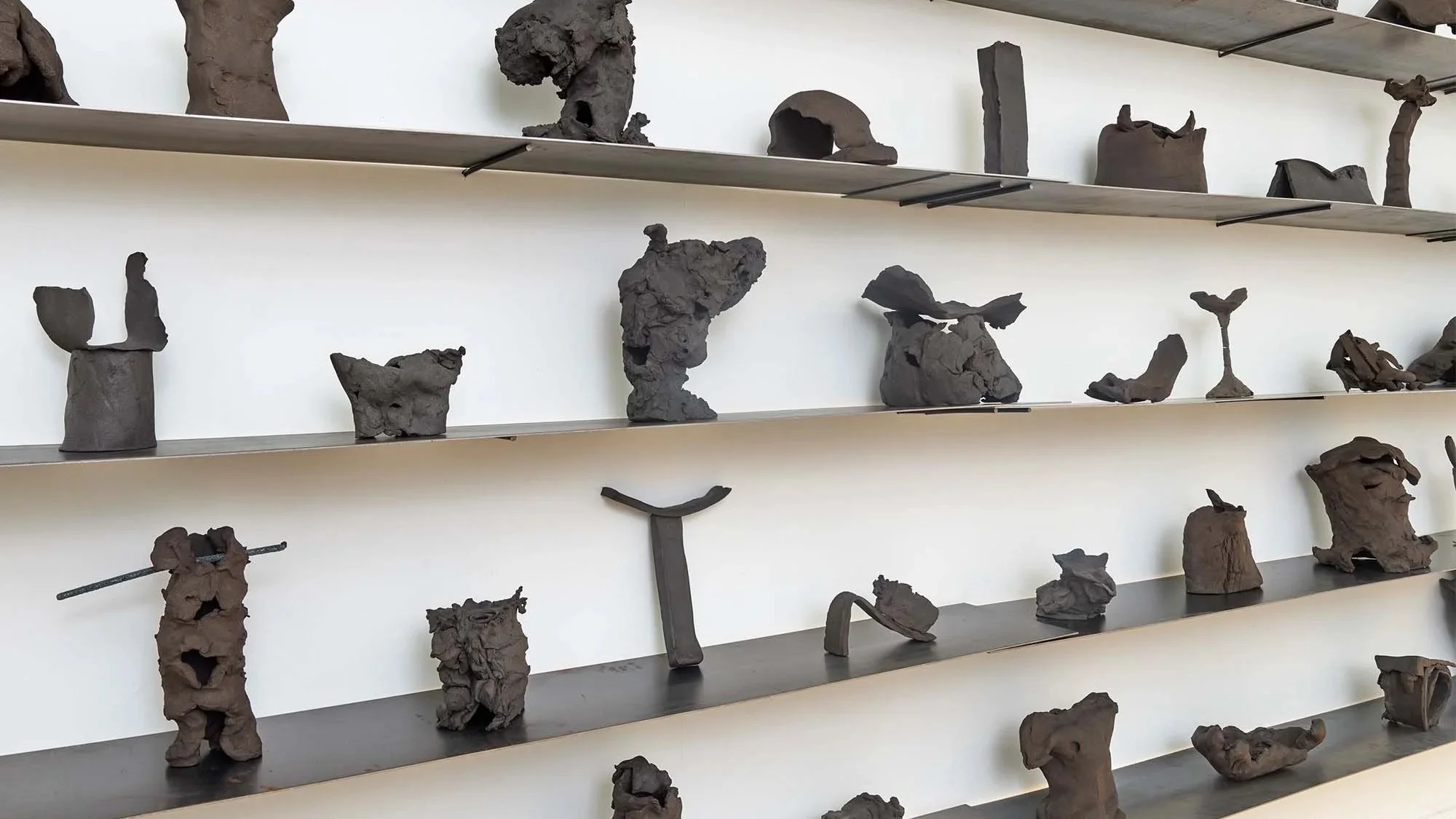
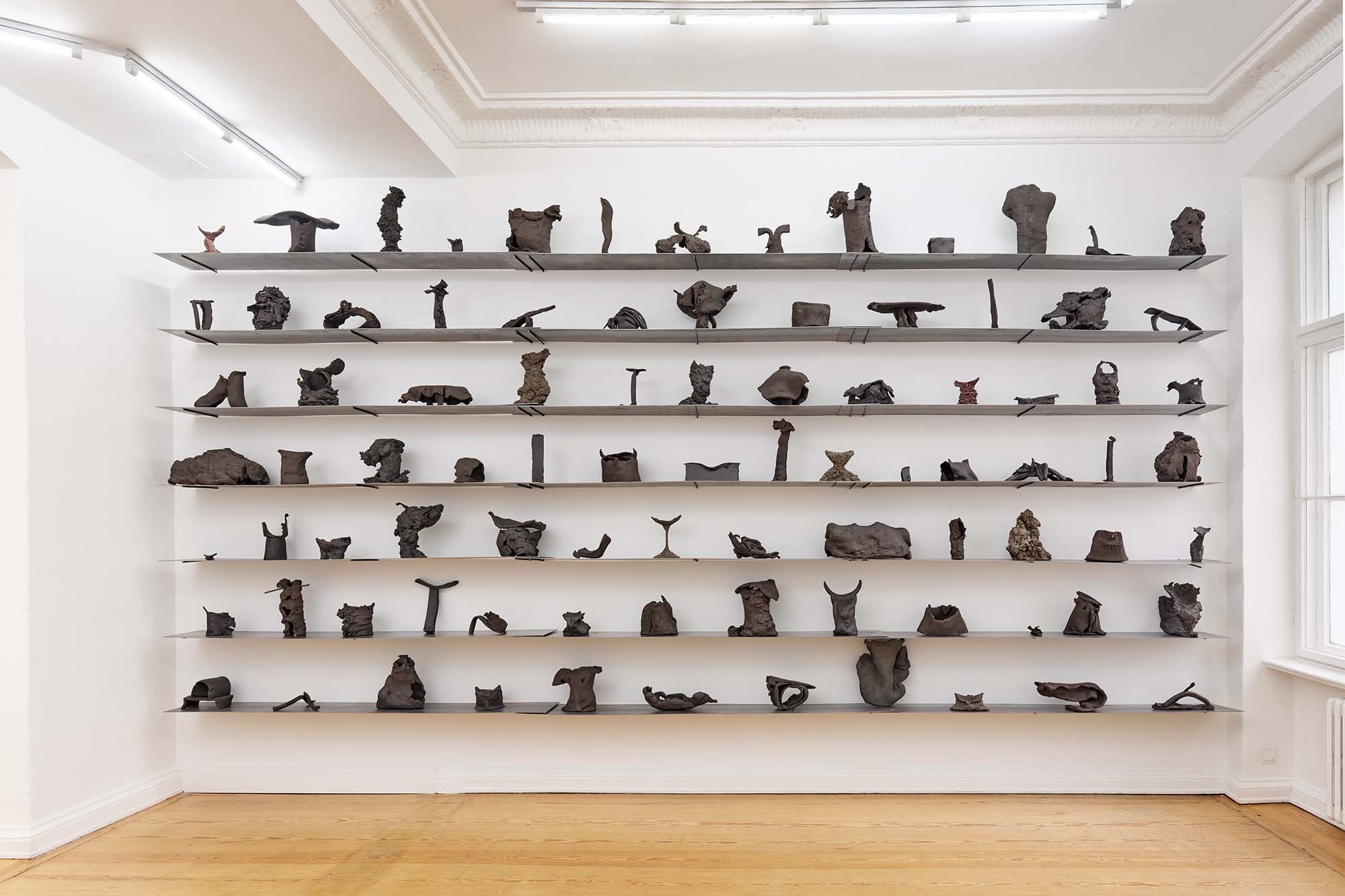
The Headrests offer yet another angle in Mann’s ongoing investigation of embodiment and perception. Inspired by artifacts from ancient Egypt and other (particularly Eastern and Southern) African cultures—used to support the head during sleep or funeral—these sculptures are shaped by a deep contact with the artist’s own life. In some, the imprint of her forehead or nose is subtly embedded in the clay. Each piece becomes both a portrait and a counter- form, simultaneously abstract and intimate, deeply bodily. For Mann, the headrest serves as a spiritual threshold; a point of contact between body and earth, self and world. The installation is an invitation into her own world, her own spirituality as in the soul’s connection to the ungraspable, to ephemerality. The headrests, here, work as a cryptic alphabet—crafted from the artist’s processing of loss and grief, and interwoven with the attempted reconstruction and questioning of familial ties — which guides the viewer in reading the piece as a testimony to care and vulnerability.
Across all three bodies of work, Mann returns to the ground—physically and metaphorically. “The ground is sculpture,” she asserts. It is the site of encounter, of weight, of support. From here, her sculptures rise cautiously, even hesitantly, into being. They carry with them emotional states—fear, shame, the urge to stand upright—and ask what it means to give ephemeral, invisible experiences a physical form. The result is the construction of a language, a sculptural syntax that speaks in imprints, silences, and shadows.
In exculpate, Claudia Mann presents three bodies of work that navigate the relationship between absence and presence, form and counter-form, shame and liberation. Working from the premise that non-presence precedes presence, the artist confronts sculpture as a trace, a process, and a dialogue between what is visible and what has disappeared. Her approach manifests the disappearance as a physical and mental presence. The exhibition features the works Headrests, Flo Vi Ru (Absence First.), and a new series titled Absence First involving sculptural remnants - aluminium casts of former wooden working boards used as supports in the sculpting process, now left sculpture-less.
The exhibition title, exculpate, stems from the Latin exculpare; to absolve, to exonerate, to free from guilt or responsibility. But for Mann, the word is unstable, even contradictory. She draws a link to sculpere, the Latin root for sculpture — “to carve away.” The combination of “ex” and “culpate” seems to dissolve into negation: to carve out guilt, to remove shame, to create a void. In this tension between what is cut away and what remains, Mann’s sculptures embody an existential search for form that acknowledges fragility, absence, and emotional residue as core material.
There is a boldness in Mann’s practice: she begins from absence. Here, absence is not simply the opposite of presence, but the condition that makes presence felt with more clarity and depth. The past leaves a mark, and that mark becomes legible in the now. In her work, absence is not born of nostalgia or longing, but becomes a method of unveiling—a gesture that renders the intangible more existentially tangible. In this way, each work inhabits a temporal fold, where memory, trace, and immediacy converge. Past and present collapse; the “now” becomes not a fixed point, but a moment of encounter shaped by what is no longer there.